
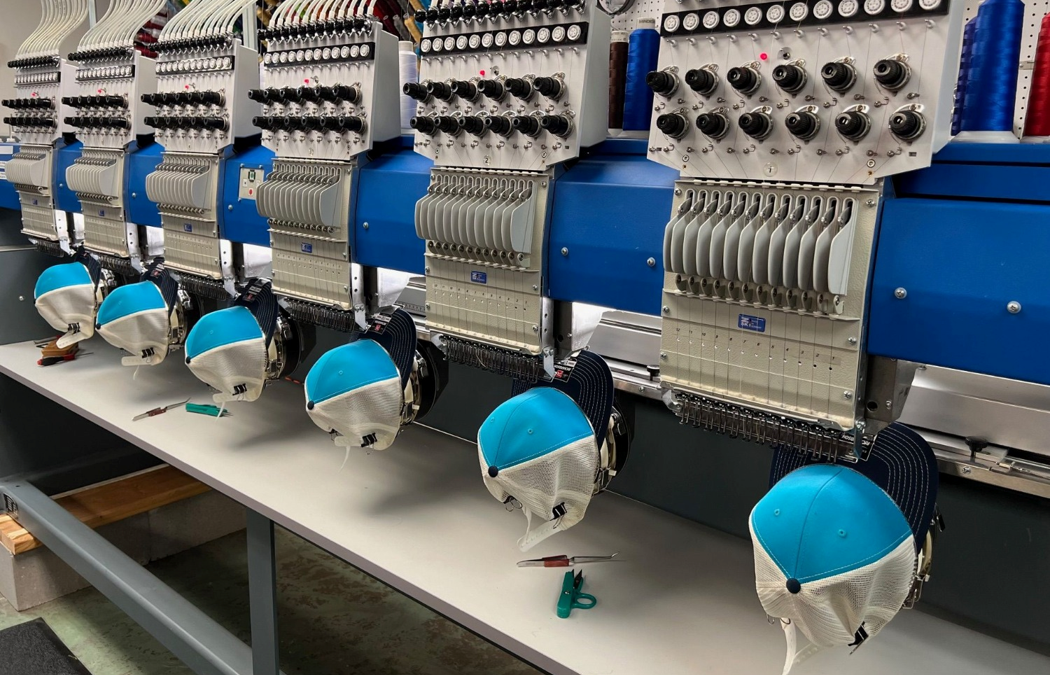
If you are ordering embroidered apparel for the first time, the process can feel like a black box. You have a logo, or a name, or a photo on your phone – and no clear sense of what happens between handing it over and picking up finished garments. At Accent Embroidery, those are the questions we answer at the counter every week, and they are almost always the same ones: What can go on what? How much will it cost? How long does it take?
This guide walks through the whole process, from the file on your phone to the finished order. You will know what decides the price, what you need to hand over, and what to ask before you commit. By the end you should be able to walk into any embroidery shop in Amarillo – ours included – and order with confidence.
Why Custom Embroidery Still Beats Print-on-Demand
There is no shortage of ways to get a logo onto a shirt. Direct-to-garment printing, heat transfers and print-on-demand services all have their place, and for a one-off novelty tee they are often the right call. But for anything you intend to wear, hand out, or reuse, embroidery behaves differently.
It outlasts the garment it’s on
Embroidery is thread stitched through the fabric. It is not a layer sitting on the surface. That matters because the failure modes you see on printed apparel – the cracked, peeling, faded graphic after repeated washing – are different from the wear patterns of stitched decoration. For uniforms that get worn weekly and washed constantly, and for merchandise meant to be used rather than admired, durability is a major reason businesses choose embroidery.
It reads as professional, not disposable
The second difference is more subtle. Embroidered logos sit slightly above the fabric and catch light, which gives them a dimensional quality that flat printing cannot match. On a staff polo or a structured cap, that texture reads as uniform – something issued, not something printed up in a hurry. If the garment is going in front of customers, that impression is doing work for you.
The Types of Custom Embroidery We Do
Most projects people bring us fall into one of a few categories. Knowing which one you are in makes the rest of the conversation faster.
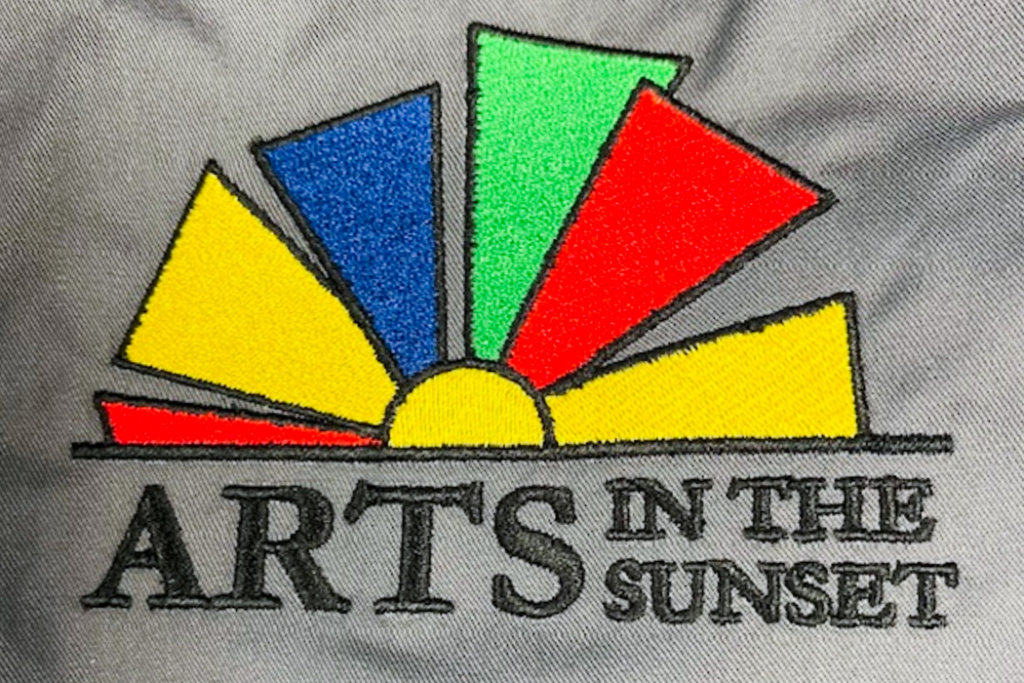
Logo embroidery for businesses
Anything where a company mark has to appear consistently across staff apparel and bulk orders: uniforms, polos, caps, workwear, event shirts. This is the highest-volume work in the shop, and it has its own set of decisions around digitizing, placement and sizing. For a deeper look at business-logo applications, read Accent Embroidery’s guide to logo embroidery for corporate apparel.
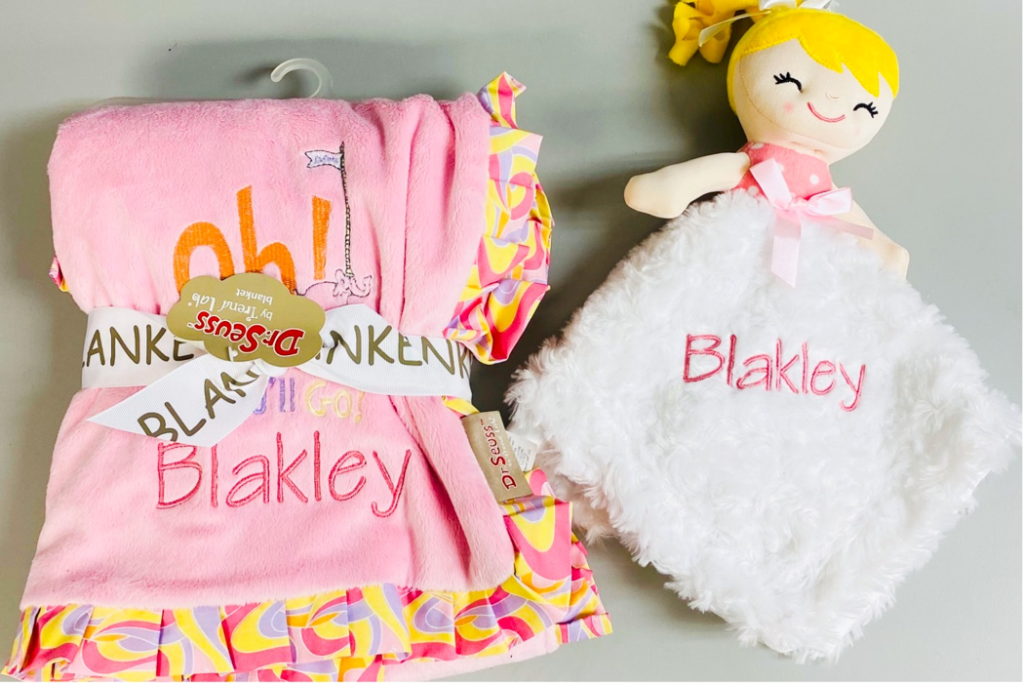
Monogramming and personalized gifts
Monograms and one-off personalization for weddings, babies, holidays and housewarmings: towels, robes, blankets, bags. The work is smaller in volume but heavier in detail – letter order, font and thread color all change the result, and there is a right answer for each occasion. For more on the difference between the two methods, read Accent Embroidery’s embroidery and monogramming guide.
Custom apparel and garment printing
Sometimes embroidery is not the right method. Garment printing handles full-color artwork, large coverage areas and photography that cannot be reproduced in thread. The practical answer is often a combination: an embroidered left chest with a printed back panel, or embroidered caps with printed tees. One order, two methods.
What the Process Looks Like at Accent Embroidery
Here is the actual sequence, so nothing surprises you.
Artwork and digitizing
Embroidering a logo is not like printing a file. The artwork has to be converted into a stitch file – a map telling the machine where each stitch goes, in what order, at what angle. That process is called digitizing, and it happens once per design. It is where quality is won or lost: a lazy digitizing job shows up as puckered fabric, gaps between color blocks and visible jumps in the stitching, no matter how good the machine is. Give us your logo in the highest-resolution format you have – vector (AI, EPS, SVG) if it exists, a large PNG or PDF otherwise. If all you have is a photo of a business card, we can usually work from it but expect a conversation about cleanup.
Stitch type, thread and backing
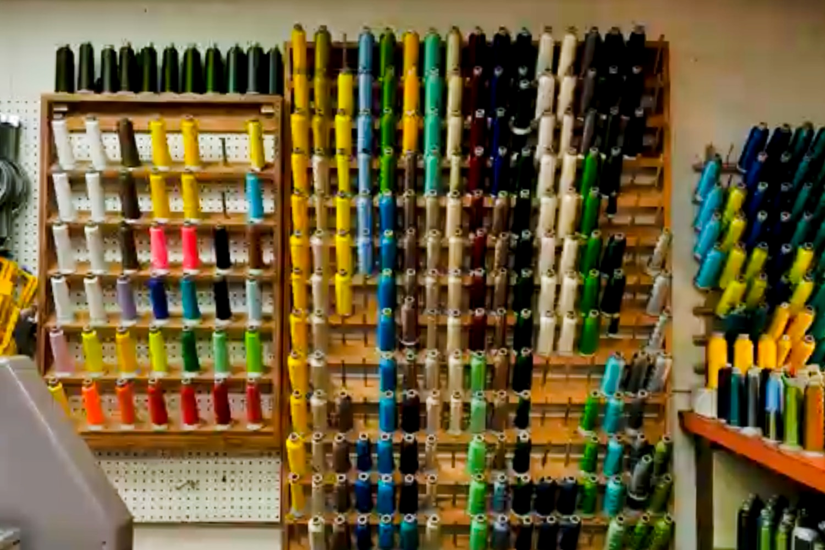
Stitch type gets chosen by the artwork and the fabric underneath. Satin stitches give solid, glossy coverage for lettering and small marks. Fill stitches cover larger areas efficiently. Run stitches outline and detail. Under all of it sits backing – the stabilizer that keeps a knit from stretching and a stitch-dense design from sinking into the fabric. Choose the wrong backing and a design that looked fine on screen can ripple on the shirt. This is also where thread color gets decided: matching a brand color works best when the shop has a reliable reference rather than relying only on how a color appears on a screen.
Placement and sizing
Placement follows conventions for a reason – a left-chest logo should sit where a breast pocket would begin, not where it happens to look centered when you are holding the shirt up. Standard placements include left chest, right chest, full front, back, sleeve, and cap front, side or back. Sizing has to scale with the garment too. A mark that reads well on a jacket can look oversized on a youth tee. Tell us where the garment will be worn and by whom, and we will size it accordingly.
Quantities and turnaround
Sewing is sequential, not instant. Every additional piece adds machine time. Small orders can move faster than large bulk orders, while larger runs need a place in the production schedule, particularly in the run-up to holidays and the start of a school or sports season. If you have a date you cannot miss, bring that deadline into the conversation early and ask for the current turnaround before you commit.
Promotional Products and Custom Branded Merch
Not everything branded needs to be worn. A large share of the branded goods businesses order now sits outside apparel entirely: drinkware, totes, notebooks, pens, tech accessories. These are the items a customer or employee uses daily, which is exactly what makes them effective. Accent Embroidery sources and brands these alongside apparel, so a single order can cover the shirts and the tumblers that go in the same welcome kit.
This is also where laser engraving earns its place. Metal, glass, wood, leather and acrylic can all be permanently marked, which is how a logo gets onto a stainless tumbler, a cutting board, or an award plaque – surfaces embroidery simply cannot touch. Combined with embroidery and print, it means one supplier for the whole order. For the full range, browse Accent Embroidery’s promotional products and customizable merchandise.
What Affects the Price of Custom Embroidery
Nobody can quote a real number without seeing the artwork and the garment, but the variables are predictable. Almost every quote comes down to three things.
Stitch count and logo complexity
Price tracks stitch count. More stitches mean more machine time, more thread and a longer digitizing job. A clean wordmark of a few letters is inexpensive compared with a detailed crest using multiple colors and fine text. Very small details may need to be simplified before they can be reproduced cleanly in thread. Bringing the artwork early, before you have committed to a design, is the simplest way to find out whether changes are needed.
Garment choice
You can supply your own garments, or the shop can help source them. Either way, the garment sets both the material cost and part of the difficulty. Heavy canvas, structured caps and performance knits each behave differently under a needle and may need different backing. Thin or highly flexible fabric can be more challenging for dense embroidery, so ask before buying a bulk lot online.
Order volume
Unit price often changes with quantity because setup work – digitizing, machine setup and production preparation – is spread across the order. If you expect multiple batches over time, tell the shop up front so the quote and production plan can reflect the actual project instead of treating each piece as an isolated decision.
Frequently Answered Questions
How much does custom embroidery cost in Amarillo?
It depends on stitch count, garment and quantity – there is no flat rate that makes sense to publish. A small left-chest logo on a garment you supply is a very different job from a multi-color logo on forty pieces of outerwear. Send the artwork and quantity and ask for a project-specific quote.
How long does embroidery take?
Turnaround depends on the order size, whether garments have to be sourced, the design work required and the shop’s current production schedule. Ask when you place the order and get a realistic completion date tied to your project.
What can I get embroidered?
Shirts, polos, button-downs, caps, beanies, jackets, vests, aprons, bags, towels, robes, blankets, and many other fabric items can be candidates for embroidery. The limiting factor is whether the item can be hooped and stitched without damage, so bring unusual items in for review before assuming they will work.
Do you have a minimum order?
Ask Accent Embroidery for the current minimum or quantity requirements that apply to your project. A single personalized gift can be handled differently from a bulk uniform order, and the relevant setup and production requirements depend on what you are ordering.
Get Your Project Started
If you have artwork, a garment and a date, you are ready. Bring the logo in whatever format you have, tell us what it is going on and how many you need, and the shop can walk through digitizing, proofing and production. If you are still deciding, that is fine too; a short conversation about what you are trying to accomplish can settle questions about method, placement and product choice before you order.
Accent Embroidery serves businesses, teams, schools and families across Amarillo and the surrounding Panhandle with embroidery, garment printing, monogramming, laser engraving and branded merchandise. Get started with Accent Embroidery or call (806) 352-3600. The shop is located at 3433 Plains Blvd., Suite 700, Amarillo, TX 79102.