
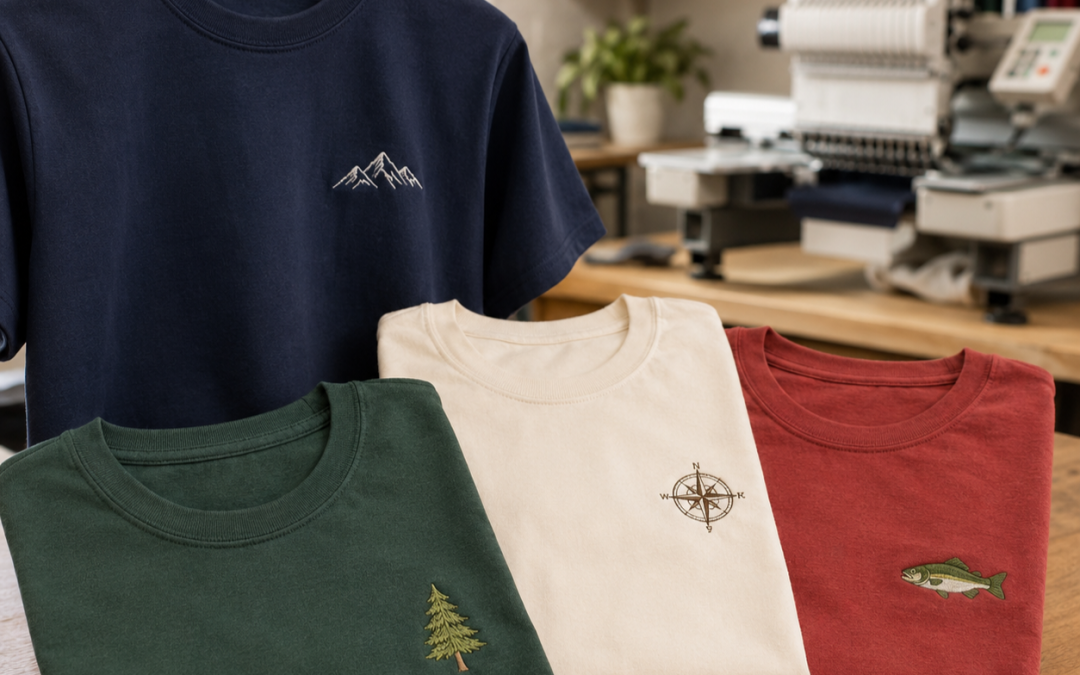
You picked a shirt, sent over your logo, and the result came back puckered, stiff, or hard to read. The design wasn’t the problem. The shirt was. Not every fabric holds stitches the same way, and the wrong choice can make even a clean logo look uneven once it’s sewn in. The fix is simple: logo embroidery on shirts starts with picking a shirt built to hold the stitching, not just one that looks good on the rack.
Not Every Shirt Holds an Embroidered Logo the Same Way
Embroidery is stitched directly into the fabric, which means the fabric itself is part of the finished result. A thin, stretchy tee can pucker around dense stitching because nothing underneath holds it flat. A loosely woven fabric can shift while it’s being stitched, throwing off the design’s shape. The heavier and more structured the fabric, the more evenly a logo sits once it’s done.
Best Shirt Types for Company Logo Embroidery
Some shirts are built for this kind of work. Here’s how the most common options compare.
Polos: A pique knit polo is the industry standard for a reason. The tighter weave gives stitches something firm to grip, and the fabric’s slight texture hides minor puckering better than a flat surface would. Polos also work well with left-chest logos, the most requested placement for company branding.
Work shirts and button-downs: Twill and canvas work shirts are heavier and more tightly woven than a casual tee, which makes them well suited to detailed logos with multiple colors or fine text. These are a common choice for trade and service businesses that need branding to survive daily wear.
Fleece and outerwear: Heavier fabrics like fleece and soft-shell jackets can support higher stitch counts without puckering, making them a good fit for larger, more detailed logos. Outdoor crews and delivery teams often choose these for branding that holds up through a full season of weather.
Henleys and lighter knit shirts: These work fine for simpler designs with lower stitch counts, but they’re not the best fit for a highly detailed logo. If your team wants a lighter shirt, keeping the design simple helps it hold up better.
Matching the Shirt to How Your Team Actually Works
The best shirt for embroidery isn’t one style for every business. An office team might lean toward polos for a clean, consistent look at the front desk or in client meetings. A crew doing embroidery in Amarillo, TX heat, dust, and long outdoor hours needs a heavier work shirt or fleece that can take daily wear without the stitching loosening or the fabric wearing thin around the logo.
Fabric Composition Matters as Much as Shirt Style

Shirt style isn’t the only decision that affects the outcome. What the fabric is made of matters just as much. 100% cotton holds a crisp, clean stitch and is common in polos and work shirts, though it can shrink slightly over time, worth factoring in if the logo sits close to a seam. Poly-cotton blends resist shrinking and wrinkling better, which is why they show up often in uniform-grade work shirts. Performance and moisture-wicking fabrics, common in athletic-style polos, tend to be thinner and more prone to stretch, so they may need a lighter stitch count or extra backing to keep a detailed logo from distorting.
What Makes a Shirt “Embroidery-Ready”
An embroidery-ready shirt usually has three things going for it: a tight enough weave to support the stitch count, enough structure to stay flat during stitching, and a fabric weight that can handle a backing stabilizer without feeling stiff. Custom embroidery services typically use a stabilizer behind the fabric during stitching, and thinner shirts sometimes can’t fully hide it once the backing is trimmed.
Questions to Ask Before You Choose a Shirt for Logo Embroidery
Before you settle on a shirt style, it helps to ask a few practical questions.
- Does the fabric have enough structure to support your logo’s stitch count?
- Will the shirt need a stabilizer, and will that be noticeable on the inside?
- Is this shirt style easy to reorder later for new hires?
- Does the shirt match how your team actually works, office, trade, or outdoors?
A shop that walks through these questions with you before stitching anything is one that cares about how the shirts will actually hold up.
Getting Your Shirts Embroidered Right the First Time
The right shirt does half the work before a single stitch goes in. Picking a fabric built to hold your logo means fewer puckered designs, less reordering, and a finished product that looks the way it was supposed to from the start.
Accent Embroidery offers custom embroidery services for polos, work shirts, outerwear, and more, right here in Amarillo. Call Accent Embroidery at 806.352.3600 or visit our website to talk through the best shirt option for your team’s logo.
Frequently Answered Questions
What’s the best shirt type for a detailed company logo?
Polos and twill work shirts hold detailed logos best because their tighter weave keeps dense stitching flat and even.
Can any shirt be embroidered?
Most shirts can be embroidered, but thin or very stretchy fabrics are more likely to pucker, especially with a detailed design.
Do polos work better than plain t-shirts for embroidery?
Yes, in most cases. A pique polo’s tighter knit gives stitches more to grip, while a plain tee’s flatter, stretchier fabric is more prone to distortion.
How do I know if a shirt needs a stabilizer for embroidery?
Lighter or stretchier fabrics almost always need a stabilizer to keep the design flat and even during stitching.